

 Reply With Quote
Did you make 100 clear vases yet? If not, get to it. Once you do that you are ready to make foots and other such things.
You are still asking for advice while refusing to follow the advice already given.

Results 121 to 140 of 212
Thread: Noob pics *open fire*
-
11-07-2012, 12:33 AM #121
 Warning progression in progress

- Join Date
- Apr 2012
- Location
- small town ks
- Posts
- 142
- Rep Power
- 15
 Re: Noob pics *open fire*
If it helps i dont have a bench roller so im having to use my hands to spin the the foot open. I also only spin the rod inbetween my fingers and not my palm.
"I did not fail a hundred times to make a light bulb i learned a hundred ways not to make a light bulb" Thomas Edisson
-
11-07-2012, 05:03 AM #122
Armadillo Art Glass Initiative


- Join Date
- Mar 2006
- Location
- Texas
- Posts
- 5,762
- Rep Power
- 159
Re: Noob pics *open fire*

Aymie
-
11-07-2012, 06:19 AM #123
O.Z.

- Join Date
- Jul 2005
- Location
- AUSTRALIA
- Posts
- 2,649
- Rep Power
- 139
Re: Noob pics *open fire*
James, I'm confused about your statement about not having a premix for fuming ... I've worked extensively on a variety of both premix and surface mix torches and I have to say that it can actually be a little trickier getting a good fume with a premix. Surface mix torches, by comparison, are a whole lot easier to work out how to get great results with both silver and gold.
Your nortel should be just fine for it and get you the whole spectrum of results which fuming can give. You need to play with your flame a bit more and remember settings for results. For example, you may fume with an oxidizing flame and see next to nothing. However once you've done the fume, if you hit the glass with a reducing flame, you will see the fume develop as the metal on the glass reduces. It's all about flame chemistry.
You also don't need a yoke or rollers to flare a foot. With practice you can flare an even foot quite easily, or even make spun feet.
Practice making objects with as few tools as you can or even no tools (other than the glass itself). You'll find that you can construct a vase or a goblet totally without tools or holders just by understanding and using the properties of hot glass, gravity, centrifugal forces, etc. Once you understand the basic principles move on to using tools. Tools are there to make life a bit easier and work a bit faster. But no amount of tools and crutches will help you if you don't understand the basics.
When practicing use a lighter wall gauge of tubing, like medium wall. It's cheaper and it will enable you to gain better control of the glass as well as your flame. If you can get proficient at shaping light or medium wall glass, heavy or extra heavy wall glass is an absolute snack.
There are no shortcuts to experience other than condensing a lot of practice into a short time frame.
I got to pull thousands of points before I was allowed to make the next step, which was straightening out all the points I pulled out crooked. After that, I got to pull all those points in half and practice test tube bottoms and then blowing spheres, then more points, then right angle bends, U bends, T joints, hose connectors etcetc ... I was lucky, I guess, i had the best scientific teacher I could have wished for. Mind you, I didn't always see it that way, but time and experience brought with it a lot of understanding ...
What most people these days don't realise is that putting in the time for practice right at the start and perfecting every step will actually save you time in the long run and increase the speed at which you learn as well as enable you to make better work. It's pretty much a no brainer. Everyone wants to drop a stem into a can on the first day... focus on practicing one thing until it is as near perfect as it will get, then move onto the next ... I know glass is exciting and there's so much exciting stuff to learn, but curb your impulse to want to learn everything right now ... be patient, take one step after the other and you will learn in a better and more useful way ...
There some good advice from very experienced people in this thread, read it, glean the wheat from the chaff and take the good advice along with you on your way ...Last edited by Aussie; 11-07-2012 at 06:25 AM.
-
11-07-2012, 08:54 AM #124
Warning progression in progress
- Join Date
- Apr 2012
- Location
- small town ks
- Posts
- 142
- Rep Power
- 15
Re: Noob pics *open fire*
Last night i came to that understanding. I guess im just tired of the failing with my ideas some work and others just fall apart. So i only got one question before i start this massacre of clear. Points or a blowtube?
"I did not fail a hundred times to make a light bulb i learned a hundred ways not to make a light bulb" Thomas Edisson
-
11-07-2012, 09:04 AM #125
Glass-a-holic


- Join Date
- May 2012
- Location
- Bennington, Vermont, United States
- Posts
- 5,473
- Rep Power
- 84
Re: Noob pics *open fire*
imo, both. points and blowtubes both have their merits.
You shouldn't be having sex for pleasure, only for reproduction.
Thousands of people read my threads now. So I’m trying to not embarrass myself.
-
11-07-2012, 09:08 AM #126
[formerly] the rookie
- Join Date
- Feb 2012
- Location
- SL,Ut
- Posts
- 1,160
- Rep Power
- 35
Re: Noob pics *open fire*
Points have there place, learning to use blowtubes its a good habit though, and teaches you welds over and over and over and over again. Blowtubes would be my vote for you, but some of the "old-timers" will hopefully chime in too.
Both have their place, try both out.Last edited by Matt P; 11-07-2012 at 09:26 AM.
-
11-07-2012, 02:28 PM #127
Armadillo Art Glass Initiative
- Join Date
- Mar 2006
- Location
- Texas
- Posts
- 5,762
- Rep Power
- 159
Re: Noob pics *open fire*
There are surely epic threads where everyone has debated this. Someone link one and prove the search works.
Aymie
-
11-07-2012, 04:16 PM #128Billyben Lurker Re: Noob pics *open fire*
-
11-07-2012, 07:47 PM #129
O.Z.
- Join Date
- Jul 2005
- Location
- AUSTRALIA
- Posts
- 2,649
- Rep Power
- 139
Re: Noob pics *open fire*
Never deny yourself the opportunity to learn a technique because of what other people tell you. Points or blowpipes? As Aymie says, endless debate. This debate is complete bullshit and it shouldn't even exist, because the bottom line is that they're both useful and very excellent techniques to know, so get proficient in one first, then get proficient in the other. You'll find yourself in situations where there is no glass for blow tubes available and you'll find yourself in situations where the glass is too heavy to rely on points or is too large a diameter to pull points effectively.
Versatility is the name of the game, become proficient at different permutations of techniques that do the same thing and you'll never get caught out
Interesting fact: a lot of the OG scientific guys over here call points "spindles" ... I believe "spindles" comes from the UK and "points" comes from mainland Europe.
-
11-07-2012, 10:55 PM #130
Warning progression in progress
- Join Date
- Apr 2012
- Location
- small town ks
- Posts
- 142
- Rep Power
- 15
Re: Noob pics *open fire*
Thats pretty cool aussie thanks for the termonology. How did you get started in scientific glass anyways?
"I did not fail a hundred times to make a light bulb i learned a hundred ways not to make a light bulb" Thomas Edisson
-
11-07-2012, 11:47 PM #131
Glass-a-holic
- Join Date
- Jan 2010
- Location
- NH
- Posts
- 57
- Rep Power
- 17
Re: Noob pics *open fire*
I worked sci tech I only heard of a point being called a point...never a spindle...spindle is a piece of a lathe....interesting to hear the different perspective though
-
11-08-2012, 03:17 AM #132
O.Z.
- Join Date
- Jul 2005
- Location
- AUSTRALIA
- Posts
- 2,649
- Rep Power
- 139
Re: Noob pics *open fire*
I was at a crossroads a bit over 20 years ago, the two things I wanted to do with my life turned out to be either largely boring or full of shit, even though they help me with my work now. My father was a humble scientific glassblower, so humble, in fact, that he didn;t realise the true value of his abilities. There was nothing he couldn't do or work out how to do with clear glass. One of his ongoing jobs was making gas/liquid seperators, which included pierce sealing 3mm diameter hose connectors into these vessels using a tiny hydrogen flame. A Smith little torch would have been to big for this job Originally Posted by James Lewis


Anyway, he asked if I wanted to come onboard and because I was disenchanted and had nothing else to do, I did. And I'm so glad I did ... it wasn't always particularly easy, mainly because I've got a fiercely independent and artistic streak, but I've never looked back. I rarely touch scientific glass anymore, but it's the best training I could have ever asked for and the best gift, in my book, for a father to pass down to his son, is to impart solid foundations to build on. Thanks, dad!
-
11-08-2012, 07:24 AM #133
Armadillo Art Glass Initiative
- Join Date
- Mar 2006
- Location
- Texas
- Posts
- 5,762
- Rep Power
- 159
Re: Noob pics *open fire*
My thoughts on points vs blow tubes is both as well. Points teach even pulls and keeping things straight and center, mostly by way of learning to get then back to center after you pull it. Blow tubes teach welds.
I have no hard rules for either. I use blow tubes 95% of the time. I find points wasteful. Christina Cody reuses points for blow tubes and blow ins, reducing the waste, mine are too thin. I pull points on 50x5 since its hard to weld a nice blow tube on something that size. When doing a tube pull, I use a 16mm tube with a small open ended blank of 26mm tube to bridge the size difference.
Aymie
-
11-08-2012, 11:07 AM #134
Burn free for zero days
- Join Date
- Mar 2012
- Location
- Houston(ish)
- Posts
- 140
- Rep Power
- 17
Re: Noob pics *open fire*
Great tip. Thanks Aymie Originally Posted by Aymie
Gary
-
11-08-2012, 11:41 AM #135
Glass-a-holic
- Join Date
- Sep 2009
- Posts
- 693
- Rep Power
- 22
 Re: Noob pics *open fire*
im in a scientific aprenticeship and first we learned to pull points to understand how the glass moves and behaves , when to pull and to rotate even and stretch even, most of the time we use points or spitzen how they are called in germany, after that we learned to make welds, connect tubes of the same and different diameter ...i think if you learn both you will be better overall with the glass then just using only blowtubes...
-
11-08-2012, 01:27 PM #136
Warning progression in progress
- Join Date
- Apr 2012
- Location
- small town ks
- Posts
- 142
- Rep Power
- 15
Re: Noob pics *open fire*
these are the vase attempts i did last night.
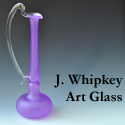
this is the shape im after. Someone left this at my house before i moved in."I did not fail a hundred times to make a light bulb i learned a hundred ways not to make a light bulb" Thomas Edisson
-
11-08-2012, 01:41 PM #137
Aka Smokinsluuu
- Join Date
- Feb 2011
- Location
- Below Tampa
- Posts
- 1,046
- Rep Power
- 27
Re: Noob pics *open fire*
What size tubing are you using for those vases ?
-
11-08-2012, 01:55 PM #138
Warning progression in progress
- Join Date
- Apr 2012
- Location
- small town ks
- Posts
- 142
- Rep Power
- 15
Re: Noob pics *open fire*
32mm x 4mm its all i have for now tonight im going to try for bigger and not be so afraid of it failing
"I did not fail a hundred times to make a light bulb i learned a hundred ways not to make a light bulb" Thomas Edisson
-
11-08-2012, 04:52 PM #139
Aka Smokinsluuu
- Join Date
- Feb 2011
- Location
- Below Tampa
- Posts
- 1,046
- Rep Power
- 27
Re: Noob pics *open fire*
Cool I knew if must've been bigger than the 25mm I was using kuz if I blew it out that big it'd be paper thin.
Good luck tonight dude.
-
11-08-2012, 05:06 PM #140
Yuuuuuuuuuuup!


- Join Date
- Aug 2011
- Location
- Eugene, Or
- Posts
- 932
- Rep Power
- 72
Re: Noob pics *open fire*
You can go huge off 25, and it is actually an important skill to be able to blow a large bubble out of smaller diameter tubing. Condense your tube down into a thick egg using gravity an light puffs to maintain an even wall thickness and shape. Once you have a large enough mass blow that shit out! If you are still having issues you can condense smaller bulbs then combine those before blowing out. Hope that helps.
Distributor of Gentec Products for the Glass Blowing Industry
Contact me for everything Gentec!
Eric F.
Area 541 LLC
Eugene, OR
(541) 335-9907Instagram:
Area 541 Facebook Page: https://www.facebook.com/area541glassGentec Torch Sales Thread: http://www.talkglass.com/forum/showt...-Small-Torches


Similar Threads
-
3/27: Open-house @ Revere Glass 6pm-9pm. Demo by Scott Deppe. Live Fire Performance!
By revere glass in forum EventsReplies: 0Last Post: 03-21-2008, 12:42 PM -
YaY more NOOB pics
By jethro in forum Pics, Galleries, and WebsitesReplies: 42Last Post: 05-25-2007, 09:14 AM
Tags for this Thread

 Posting Permissions
Featured Member's Spotlight!





Donate to our forum!
Bookmarks